
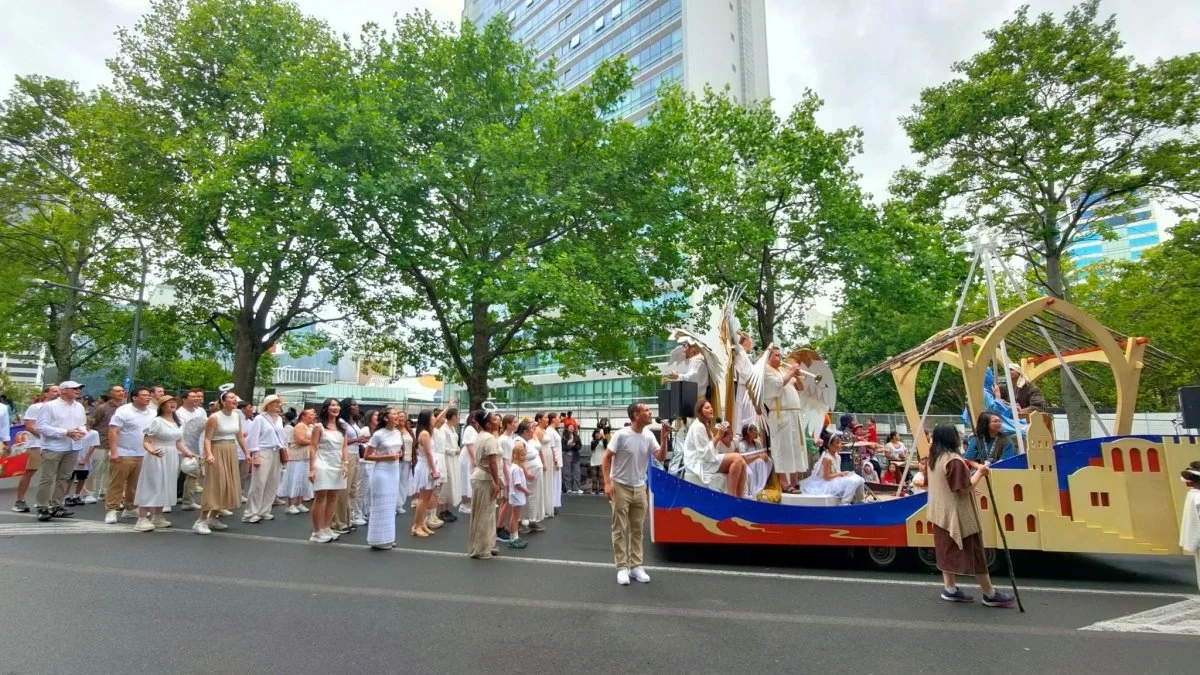
Nativity Float at the 2025 Auckland Santa Parade
In 2025, Christians from across Auckland came together to build and enter a Nativity float in the Auckland Farmers Santa Parade—and it was awesome!
This year, we want to do it again while getting people to participate, share and amplify the Christmas story beyond the audience of the Santa parade.
That's why we chose an art competition, with an exciting prize: the opportunity for the winning artist and their family to dress up and join the Nativity float in the parade.
But why?
Art engages the whole person, helping us rediscover the Christmas story on a deeper level
French-American literary critic and essayist George Steiner once said it’s almost cruel to contrast the communicative wealth of art with “the waste motions of the verbal”.
Words have the power to explain an idea or concept, but art is a way of communicating with the whole integrated person: not just the intellect, but also the emotions, imagination, memory, senses, and spirit—especially when the holy spirit is at work. And it can communicate a thesis of information in a matter of seconds or less at a deep level.
That’s because art can move the body, soul, and spirit before the mind has found the words. Music can make us want to move; a performance can bring tears; an image of suffering can produce a visceral sense of discomfort.
Modern neuroscience and psychology can help explain some of the mechanisms through which art does this. But Christianity has always understood that human beings are more than information-processing machines. We are embodied creatures who perceive and experience the world through all our senses, who perceive and create meaning, truth and beauty through stories and symbols.
We see in Genesis that people are created in God’s image, and God is a creator. What it means to be human is to create and cultivate - as Andy Crouch would put it.
In Mark, we see Jesus call people to love God with all their heart, soul, mind and strength. Creating art that communicates God’s Kingdom to the senses is one way to be fully human and engage the full person in creating and loving God.
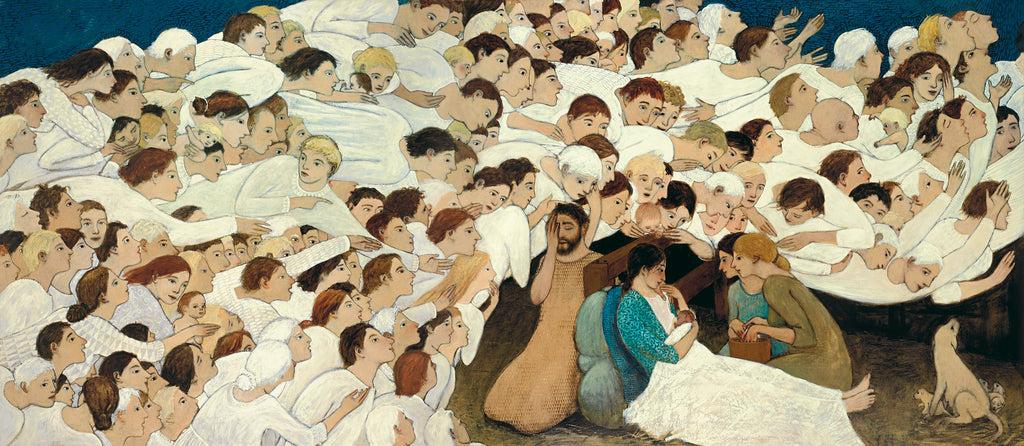
Nativity — Brian Kershisnik (2006)
Art invites participation and imagination
Art invites curiosity and imagination, and imagination is where people rehearse possibilities and make meaning, move the horizons of the possible and impossible, and call vision into reality.
For the receiver of art, someone looking at a piece of art, it comes to us “slant”, inviting participation and can bypass cynical and protective barriers people have.
This is one of the reasons why Jesus spoke in parables - which are similar to art in this sense. The listener has to imagine the scene, consider the characters and confront the implications, immersing themselves in the story until the meaning becomes apparent to them and influences them, as one scholar put it “a parable is an earthquake opening up the ground at your feet.”
Art functions in a similar way to a parable.
It presents an image that invites participation, interpretation, sometimes revealing meaning gradually rather than explaining everything immediately. Like a parable, art can slow comprehension, block automatic prejudicial reactions, and come at us as Eugene Peterson would say “on the slant”.
So, asking people to imagine the Nativity in Aotearoa is more than a PR initiative to get shares and engagement and donations; it invites them to inhabit the story imaginatively and therefore know it on deeper levels. They are not simply being told about the Christmas story. They are being invited to enter into it creatively, participate in it. You have to wrestle with what those concepts actually mean and how you might express them to someone else.
People therefore become contributors to the story rather than merely consumers of the message. They have something of their own to share, a reason to talk about the campaign, and a personal investment in its success, leading to more engagement and shares.
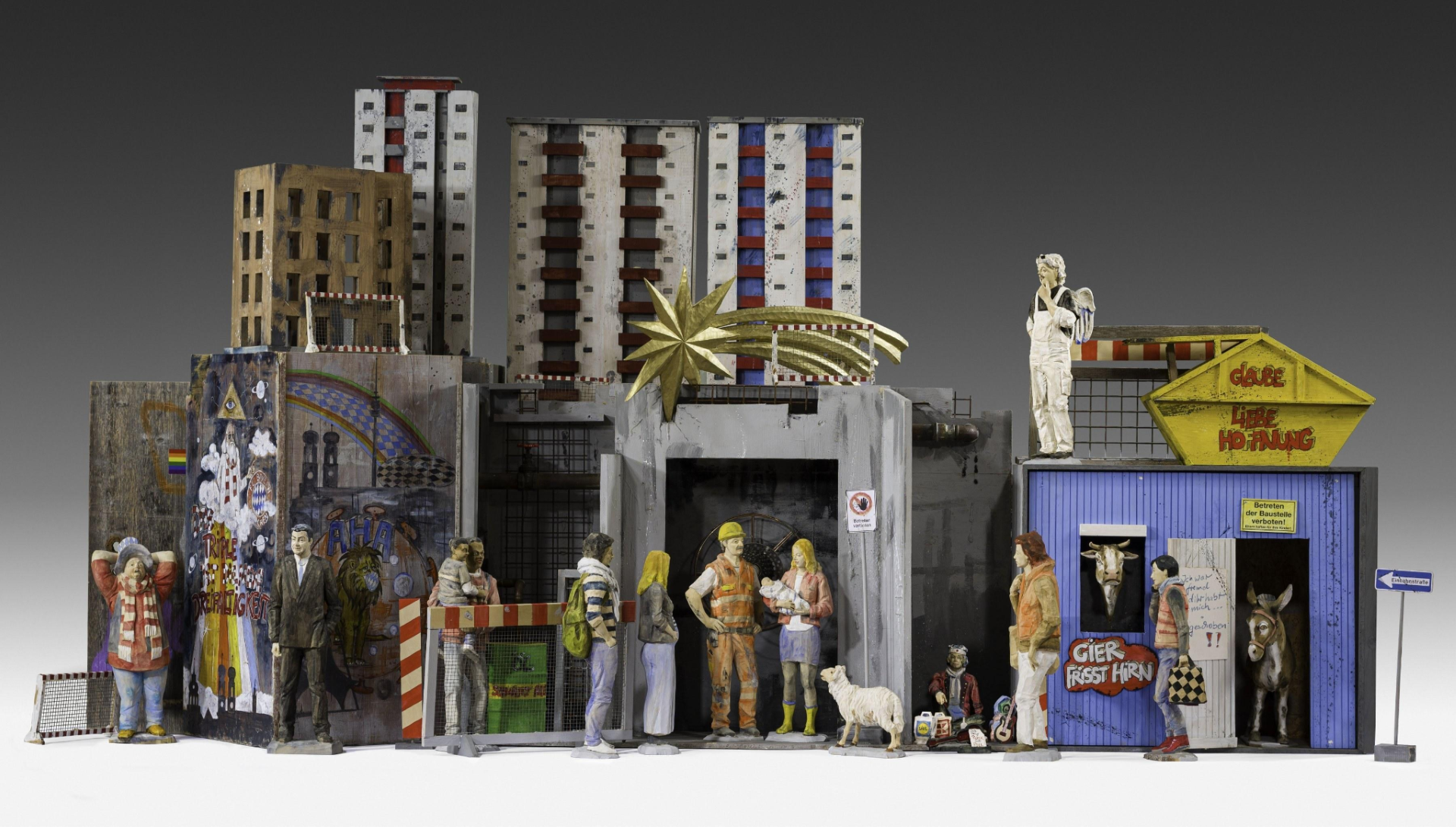
Jesus Is Born on a Construction Site— Rudi Bannwarth
Art can make a familiar story feel new again
Familiarity can be a double-edged sword.
We recognise the Nativity scene, know the Christmas carols and understand the usual imagery of the season. But sometimes, the more familiar something becomes, the less attention we give it and its meaning fades. It becomes cliché. We can recognise an image without really seeing it.
Good art interrupts that familiarity by inviting us to look again. It’s the difference between fast thinking and slow thinking. An unexpected image or question can interrupt automatic patterns of perception and prompt us to reconsider what we thought we already understood. So rather than passively recognising the familiar nativity scene, we begin actively interpreting it.
Which is why in the art competition, we invite people to connect Christmas traditions with their Christian origins.
We explore the essential meaning of a story, separated from the cliché. For example, Christmas lights as Jesus, the light of the world. Giving gifts to symbolise God’s generosity. Santa representing St Nicholas.
That is the opportunity for this campaign. We're not simply asking people to reproduce a Nativity scene. We're asking them to see it again, imagine it differently and rediscover the remarkable claim at its centre: that God entered the world as one of us.
The invitation is simple: bring your imagination, explore the story of Christmas, and help us share it with Aotearoa New Zealand.
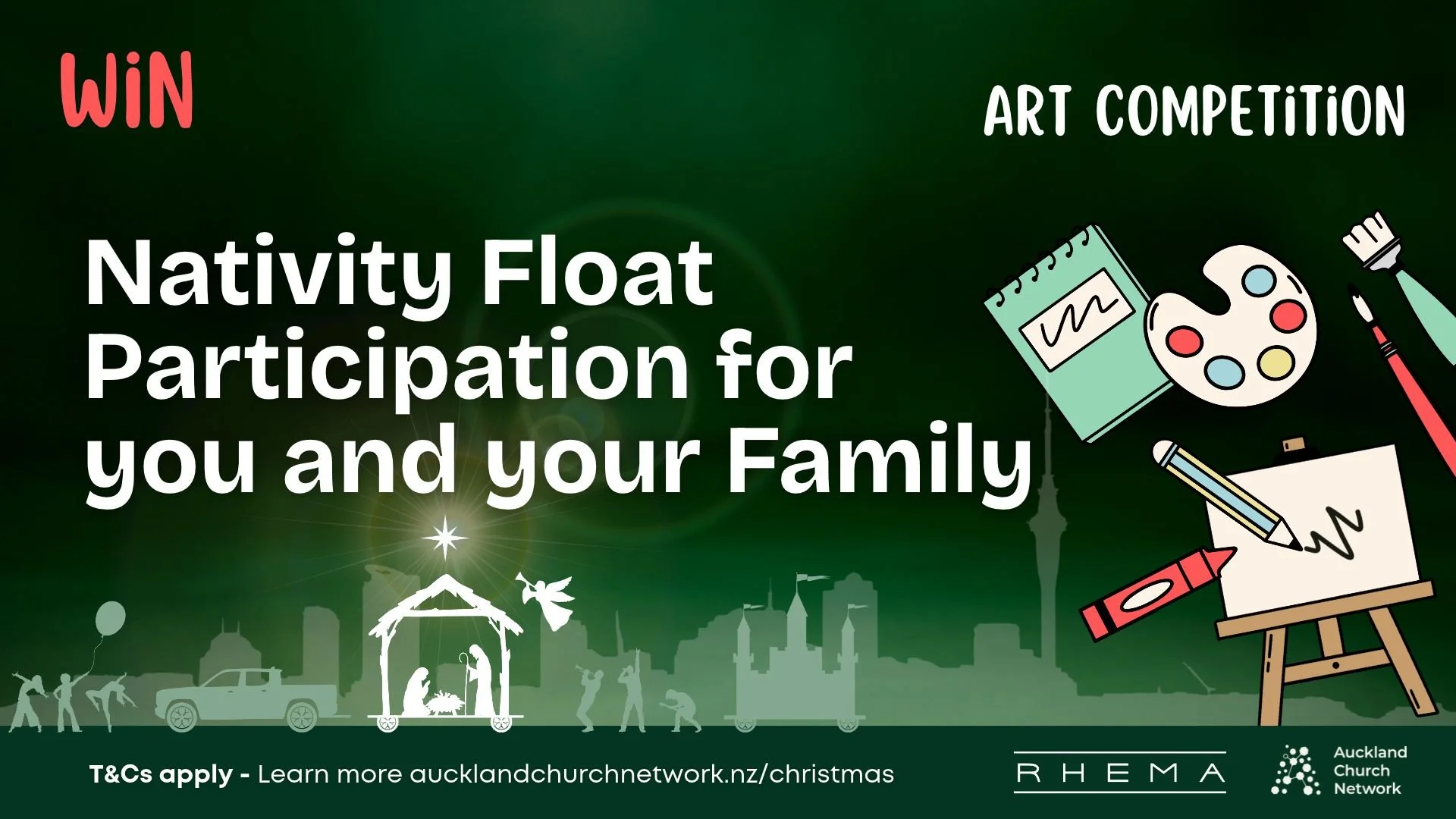
To enter visit aucklandchurchnetwork.nz/christmas. Entries are free and close on 20 November 2026. Anyone participating on the float must be aged seven or older.
by John Watson, Good Mahi